Imagine walking into a primary school on an ordinary weekday and finding the mayor in a meeting, the newsroom chasing a story, the radio presenters cueing up a record and a queue at the café, where the only way to get your order is to ask for it in French. Everyone in charge is aged between seven and 11.
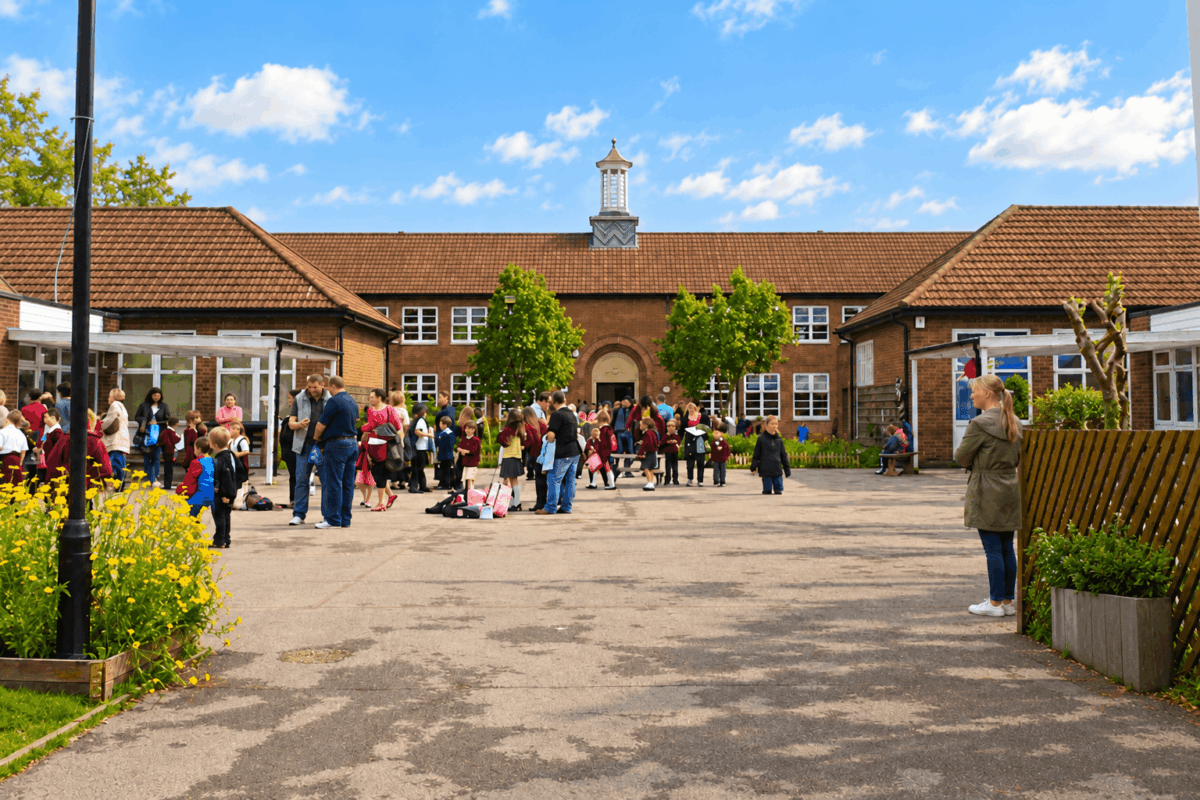
That was daily life at Grange Primary School in Long Eaton, Derbyshire, in the mid-2000s. The children called their town Grangeton, and the story of how it came about is one of the most joyful school turnarounds in recent British memory.
A school with nothing to lose
When Richard Gerver became headteacher at Grange, the school was struggling. Results were well below the national average, and by Richard’s own account to Teachers TV, Key Stage 2 scores had all been below 50%. The University of Derby, which later gave him an honorary doctorate, describes the mood when he arrived plainly: pupils were disaffected, teachers were gloomy and morale was on the floor.
Richard hadn’t taken the usual route into the classroom. He had tried acting, sold advertising, written copy and worked as an estate agent before going to university in Derby. It was the woman who later became his wife, then training to be a teacher herself, who signed him up for a PGCE. Standing in her classroom doing drama with her pupils, he told Tes, was an epiphany.
What he found at Grange was more hopeful than the results suggested. The staff loved the children, the children loved the staff, and many of the staff were part of the local community. And, as he put it later, because the school had nothing to lose, it could afford to try something bold.
Building a town inside a school
The biggest problem, Richard felt, was that children couldn’t see why they were learning. So the school set out to give them a reason. Together, staff and pupils built Grangeton, a model town run by the children inside the school.
When Ofsted inspected in May 2004, the project was still in its pilot year. Inspectors found a TV studio, a radio station, a media suite, a language café, a library and a museum already fully or partly up and running, staffed by pupils in Years 3 to 6 at lunchtimes and after school. From that September, every pupil was to have a Grangeton afternoon each week. The inspectors wrote that it was extremely clear the project was motivating pupils.
Over time the town grew. Tes reported that it had shops, a newspaper and a town council, and that junior pupils applied for their jobs and worked in them before, during and after the school day. The school council became the town council, with a mayor elected from Year 6, and according to the University of Derby that mayor also sat on the school’s real governing body. There was a craft shop, healthy eating shops and the café, run Parisian style, where customers had to order in French.
Real experts, real jobs
What made Grangeton feel real was that the children were trained by people who did these jobs for a living. The University of Derby records that the BBC trained the TV team, local MPs came in to talk about how democracy works, and businesses advised on running the café and looking after customers. The school’s view was simple: why wait until 14 for work experience when you can bring the work to the children?
Every subject had a purpose. Writing became scripts, articles and menus. Maths became prices, takings and stock. Speaking and listening became interviews, council debates and customer service. As 11-year-old Georgie, head waitress at the language café, told Teachers TV, not many people her age got to work in a café, and they got to speak French while they did it.
From the bottom to the top
The change in results was dramatic. Richard told Teachers TV that, three years after those sub-50% scores, the school’s SATs results were in the high 80s to 100%. Tes reported in 2007 that within 18 months results had risen into the top 10% nationally, and in a later Tes interview Richard described the leap as going from the bottom 5% to the top 5%. The University of Derby says results doubled. The exact figures vary a little depending on who is telling the story and which year they mean, but every source agrees the improvement was remarkable.
Richard’s own explanation was about attitude rather than tricks. Learning, he told Tes, had become fun. Children came to school excited about their Grangeton jobs and could see a direct link between their lessons and the world outside.
Recognition followed. In 2005 Richard won the Promethean Award for Primary Headteacher of the Year at the East Midlands regional ceremony of the Teaching Awards, and the school’s work was later recognised by UNESCO.
Never standing still
Grangeton wasn’t the end of the story. The school went on to reshape its whole curriculum around four strands (communication, enterprise, culture and well-being), with literacy, numeracy, science and technology taught through them. On Friday mornings, Tes reported, the school became a “university”, where children chose short courses run by parents, governors and visitors, from French to cycling proficiency to dance.
Richard led Grange for eight years. Speaking to Tes in 2022, he was honest that he had perhaps stepped away too soon, and that the school went through a difficult patch under new leadership before getting back on track. He went on to become a writer and speaker on education and leadership, and in 2020 became president of the School Library Association.
What we can take into our classroom
Most of us won’t build a TV studio next term, but the thinking behind Grangeton travels well:
- Give the learning a job to do. A letter that will really be sent or a newsletter that will really be read lifts the quality of writing in a way a worksheet rarely does.
- Let children apply for roles. Writing an application and being interviewed for a classroom job, from librarian to reporter, builds confidence and real-world language.
- Turn the classroom into a business for a week. A pop-up shop, café or museum brings money, measures, persuasive writing and teamwork together in one purposeful project.
- Invite the experts in. Parents and local people have skills worth sharing. One visitor who does the job for real can spark more curiosity than a whole unit of slides.
- Hand over real responsibility. Grangeton’s mayor had a seat at the governors’ table. Giving pupils decisions that actually matter shows them their voice counts.
- Make it fun on purpose. Richard’s verdict was that results changed because attitudes changed. Joy isn’t a distraction from learning; it is often the way in.
A final thought
Grange Primary didn’t have special funding or a shiny new building. It had a community that cared, a headteacher willing to try something unusual and children who rose to the responsibility they were given. Sometimes the best way to show pupils why learning matters is to let them run the town.
Sources
- Ofsted – The Grange Primary School inspection report (May 2004)
- Tes – It’s all about me (Diana Hinds, October 2007)
- Tes – 10 questions with… Richard Gerver (November 2022)
- University of Derby – Honorary award commendation: Richard Gerver
- BBC News – Region’s teaching heroes honoured (June 2005)
- Teachers TV – Going to Town (2005), via Alexander Street
Categorised in: Ibbleobble
This post was written by ibbleobble_paul