On sports day at one London school, some of the pupils take part from their hospital beds. There are virtual trips steered by video robots, visits from chefs, and a weekly book club. Certificates are handed out with particular care, because, as Ofsted inspectors noted in 2023, some of these children have never had the chance to receive one before.
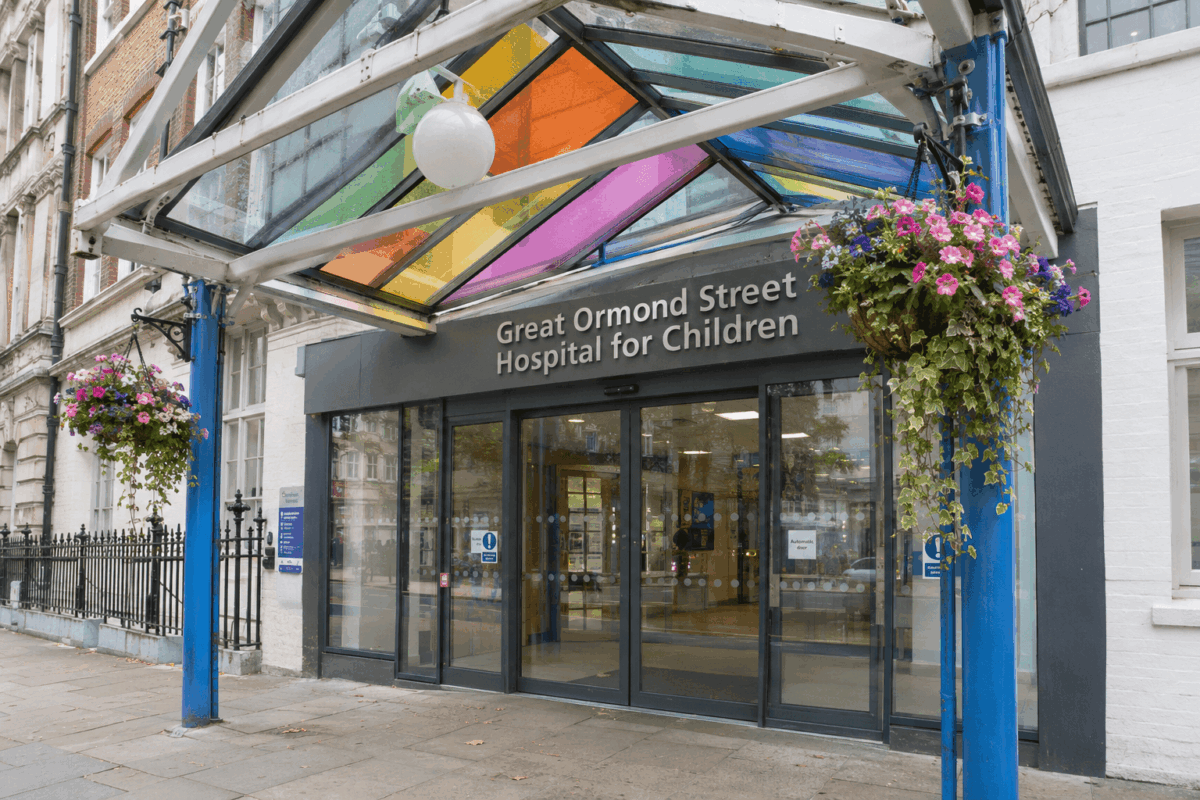
This is daily life at the Children’s Hospital School at Great Ormond Street and University College Hospital. Its classrooms sit inside two of the country’s best-known hospitals, and a good deal of its teaching happens not in a schoolroom at all, but at a bedside.
A school with a thousand pupils a year
Education at Great Ormond Street Hospital began in 1951, when a tiny teaching team first started lessons for children too unwell to be anywhere else. More than seventy years later the school has bases at both hospitals and a staff of just over forty teachers, teaching assistants and support staff.
The roll changes every day. Pupils arrive because they have a medical or mental health need, stay for a short visit or many months, then go back to the school they already belong to. They remain on their home school’s roll the whole time. Ofsted recorded 79 pupils on roll in November 2023, but around 1,000 children and young people pass through in a year, from across the UK.
Some are in hospital after a transplant, during cancer treatment, or for regular dialysis. Elizabeth Armin, a primary teacher at the school, told the Guardian in 2017 that she worked mainly one-to-one on the wards with long-stay primary pupils: children who might be in for months, or who returned so regularly that the hospital became part of their education.
Lessons that move with the child
The first job, inspectors found, is to build a warm, professional relationship quickly. Teachers get to know a pupil in hours rather than weeks, then work out what they can manage that day. Energy and medical needs change, and a lesson that was possible in the morning may not be possible after treatment.
Staff are trained to teach in a hospital and work closely with healthcare teams as well as with the children themselves. They follow, as far as they can, what the pupil would be doing at their own school, but they also stay flexible. Armin described working with a child who had become fascinated by space. It was not what her home school was covering, so they built art and science work around the solar system.
Ofsted saw the same instinct. Teachers recap earlier learning, adapt the curriculum from day to day and raise their sights when a pupil is ready. Inspectors described accredited units arranged for a young person who wanted to study Spanish. Some pupils overcome considerable gaps in their education and go on to study for a range of qualifications.
In the schoolrooms, pupils who are well enough work alongside one another. On the wards, teaching often happens in cubicles, transplant suites and isolation rooms. Children who cannot come to the schoolroom are usually taught for up to an hour a day, the school’s own guide for new staff explains, and for longer when health allows. Sessions can be video-linked to the wards, and pupils comment on one another’s work online, so a child who has to stay in their room is still part of a class.
Bringing the outside world in
Headteacher Neela Moorghen has described the school’s other gift as a thread of ordinary life in a clinical world that can feel overwhelming. Lessons, plays, weekly awards and even exams make the day feel more like school.
Teachers bring the outside in. The school’s website talks of minibeasts arriving in mobile ponds and 3D-printed replica objects from museums appearing at the bedside. Ofsted praised work with galleries and museums, virtual trips and visiting chefs. Reading has a special place, with a weekly book club, and children who need phonics follow the programme used by their home school.
Armin recalled a musical performance in the schoolroom that also featured video clips from pupils on the ward, so children who could not leave their rooms still had a part. And there are exams: one pupil, she said, gained two A grades in GCSE science during a long hospital admission. Being in hospital, the school shows, does not mean learning has to stop.
Outstanding, again and again
A full inspection in February 2014 rated the school Outstanding in every area, and short inspections in June 2018 and November 2023 confirmed that it remained so. When the 2014 report was published, Great Ormond Street Hospital noted that this was the third consecutive Outstanding judgement, after inspections in 2006 and 2009.
In 2023, inspectors wrote that pupils achieve extremely well and that behaviour is exemplary. Children enjoy the lessons and are helped to see the value in learning, even when their conditions are complicated. One parent, quoted by Ofsted, said that at an extraordinarily difficult time the school had had a really positive impact on their child’s life.
Jayne Franklin, who became headteacher in September 2011 and was still in post when inspectors visited in 2023, said after the 2014 inspection that the judgement recognised hard work by everyone connected with the school and the hospital. Education here is not an add-on to treatment. It is part of how children keep hold of progress, confidence and a sense of themselves as learners.
What we can take into our classroom
Few of us will teach on a hospital ward, but the thinking behind this school travels well:
- Meet the child as they are today. Energy and attention change. A short session a pupil can finish often beats a longer plan that overwhelms them.
- Follow a genuine interest. A topic that lights a child up, as space did for one long-stay pupil, can carry reading, writing, art and science with it.
- Keep the home thread unbroken. Hospital teachers work from the pupil’s own curriculum and phonics programme wherever they can. When a child moves between teachers, find out what they were doing and build from there.
- Make isolation smaller. Sharing work online, joining by video or contributing a clip to a performance helps children feel part of a class.
- Bring the outside in. A museum object, a visitor or a surprising artefact on the desk can lift a lesson that worksheets cannot.
- Celebrate the work. For some pupils at Great Ormond Street, a certificate is a first. Noticing achievement, and letting children look back over what they have done, helps them see their own progress.
A final thought
When a child is too unwell to get to school, it would be easy to decide that lessons can wait. The teachers at Great Ormond Street have spent decades proving the opposite. Learning is not a luxury to be picked up again later. It is part of a child’s ordinary world, and sometimes the most powerful thing a teacher can do is arrive at the bedside, open a book, and begin.
Sources
- Ofsted – Children’s Hospital School at Gt Ormond Street and UCH (28 and 29 November 2023)
- The Guardian – Teaching children in hospital (Elizabeth Armin, as told to Ruth Stokes, 20 October 2017)
- The Children’s Hospital School – welcome from the headteacher
- The Children’s Hospital School – Our History
- Great Ormond Street Hospital – The hospital school at GOSH
- Great Ormond Street Hospital – The Children’s Hospital School at GOSH and UCH celebrates outstanding OFSTED report (19 March 2014)
- The Children’s Hospital School – School Background & Information (2024)
Categorised in: Ibbleobble
This post was written by ibbleobble_paul