On a December evening in 2020, Stephen Fry appeared on screens around the world from the Natural History Museum in London to name the winner of the Global Teacher Prize. Run by the Varkey Foundation in partnership with UNESCO, the award comes with US$1 million and is often called the Nobel Prize of teaching. That year, more than 12,000 teachers from over 140 countries had been nominated or had applied.
The winner was Ranjitsinh Disale, a 32-year-old primary teacher from a small village school in Maharashtra, western India. He watched the virtual ceremony from his family home, with his parents and his one-month-old baby beside him. Within minutes he had made the prize memorable for a second reason. He announced that he would split half of it equally between the other nine finalists.
It’s a lovely story to share in the staff room. The headline is remarkable, but the years of patient, practical work behind it are what make it worth reading.
A school between a cattle shed and a storeroom
Disale nearly didn’t become a teacher at all. He had dropped out of an engineering course, and his father suggested he try teacher training to see whether it suited him. It did. In 2009 he joined the Zilla Parishad Primary School in Paritewadi, a village in the drought-prone Solapur district.
The building was in a poor state, squeezed between a cattle shed and a storeroom. Many of the girls came from tribal communities where attendance could drop to almost nothing and teenage marriage was common. There was also a more basic problem. The curriculum wasn’t taught in the children’s home language, Kannada, so a lot of them simply couldn’t follow their lessons.
Disale could have blamed the circumstances. Instead, he moved to the village and learned his pupils’ language.
Meeting children in their own language
Once he could speak Kannada, Disale translated the class textbooks into the children’s mother tongue. That alone made the curriculum accessible to many of them for the first time. He then went a step further.
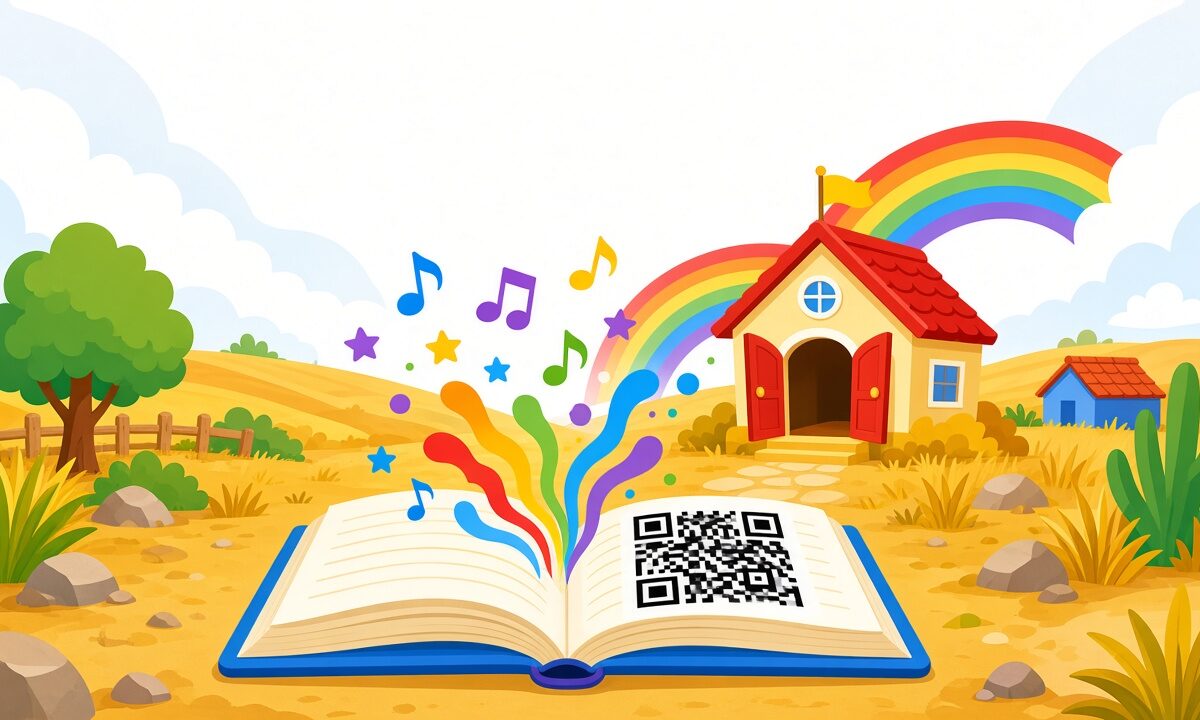
He printed QR codes in the textbooks. When pupils scanned one, it opened audio poems, recorded explanations, stories and follow-up tasks connected to that page. A static book became something children could listen to, revisit and explore at their own pace. He also read pupils’ reflections on what they had learned and used them to adjust the content and activities, giving each child a more personal route through the material. Later he added accessibility tools, such as an immersive reader, to support girls with special educational needs.
According to the Global Teacher Prize, the results were striking. Girls’ attendance reached 100 per cent, the village reported no more teenage marriages, and the school was named the best in its district, with 85 per cent of pupils achieving top grades in their annual exams. One girl from the village went on to graduate from university, an ambition that had once seemed out of reach.
From one classroom to a whole country
Good ideas spread, and this one spread a long way. Disale’s school was the first in Maharashtra to use QR-coded textbooks. After a successful pilot, the state government announced in 2017 that it would introduce them across all grades. In 2018, India’s national education ministry announced that all NCERT textbooks, the core curriculum books used across the country, would carry embedded QR codes.
So an idea that started with one teacher trying to reach a few children in a drought-hit village now sits in textbooks used by millions of pupils.
His work didn’t stay inside the curriculum, either. According to the Global Teacher Prize, his pupils applied their learning to local environmental problems and helped protect around 250 hectares of land around the village from desertification. He also set up “Let’s Cross the Borders”, a programme that pairs young people from countries in conflict, including India and Pakistan, so they can learn about each other. He has taught tens of thousands of children in other countries through virtual lessons and trained thousands of fellow teachers in Maharashtra to use technology in their own classrooms.
“Sharing is growing”
That brings us back to the prize money. Disale told Stephen Fry that sharing it would let the other finalists, who taught in countries including the UK, the USA, Nigeria, Brazil and Vietnam, scale up their own work. Each of them received around US$55,000. According to CNN, it was the first time any winner had done this in the prize’s six-year history.
In his speech he described teachers as “the real change-makers” who work with “a mixture of chalk and challenges”. He ended with a phrase that has stuck with many educators since: “sharing is growing”.
Speaking to the Indian Express, he said he couldn’t change the world on his own and wanted to “get more hands on board”. He also said he planned to use some of the money for a fund to help other teachers develop their own ideas for children.
Why this story matters to us
It would be easy to file this under “extraordinary people doing extraordinary things”. What stands out, though, is how ordinary most of the steps were. He listened, learned a language, translated a book, added a simple piece of technology and kept adjusting based on what his pupils told him. None of it needed a big budget. It needed persistence and a real belief that every child in the room deserved to understand the lesson.
What we can take into our classroom
- Start with access. Before working on engagement, check that every child can actually get into the learning, whether the barrier is language, reading level or special needs.
- Value home languages. Learning a few words of your pupils’ home languages, or using dual-language resources, tells children their background belongs in the classroom.
- Make resources multi-layered. A QR code on a worksheet or display that links to an audio explanation or short video lets children revisit learning at their own pace.
- Let pupil reflections shape your next lesson. Quick exit slips or voice notes show you where to adjust.
- Connect learning to real problems. Local issues, from litter to biodiversity, give children a reason to apply what they know.
- Share what works. Disale’s ideas grew because he passed them on. Use a staff meeting slot to share one small win.
Sources
- Global Teacher Prize – Ranjitsinh Disale 2020: https://globalteacherprize.org/pages/ranjitsinh-disale-2020
- UNESCO – Indian Teacher wins US $1 million Global Teacher Prize 2020: https://www.unesco.org/en/articles/indian-teacher-wins-us-1-million-global-teacher-prize-2020
- CNN – Indian village schoolteacher wins $1 million global prize – and gives half to the runners-up: https://www.cnn.com/2020/12/04/world/global-teacher-prize-scli-intl
- The Indian Express – Ranjitsinh Disale, world’s most exceptional teacher, shares half of $1 mn prize money: https://indianexpress.com/article/education/worlds-most-exceptional-teacher-from-solapur-zp-school-shares-half-of-s1-million-prize-money-with-other-teachers-7088372/
Categorised in: Ibbleobble
This post was written by kidd78